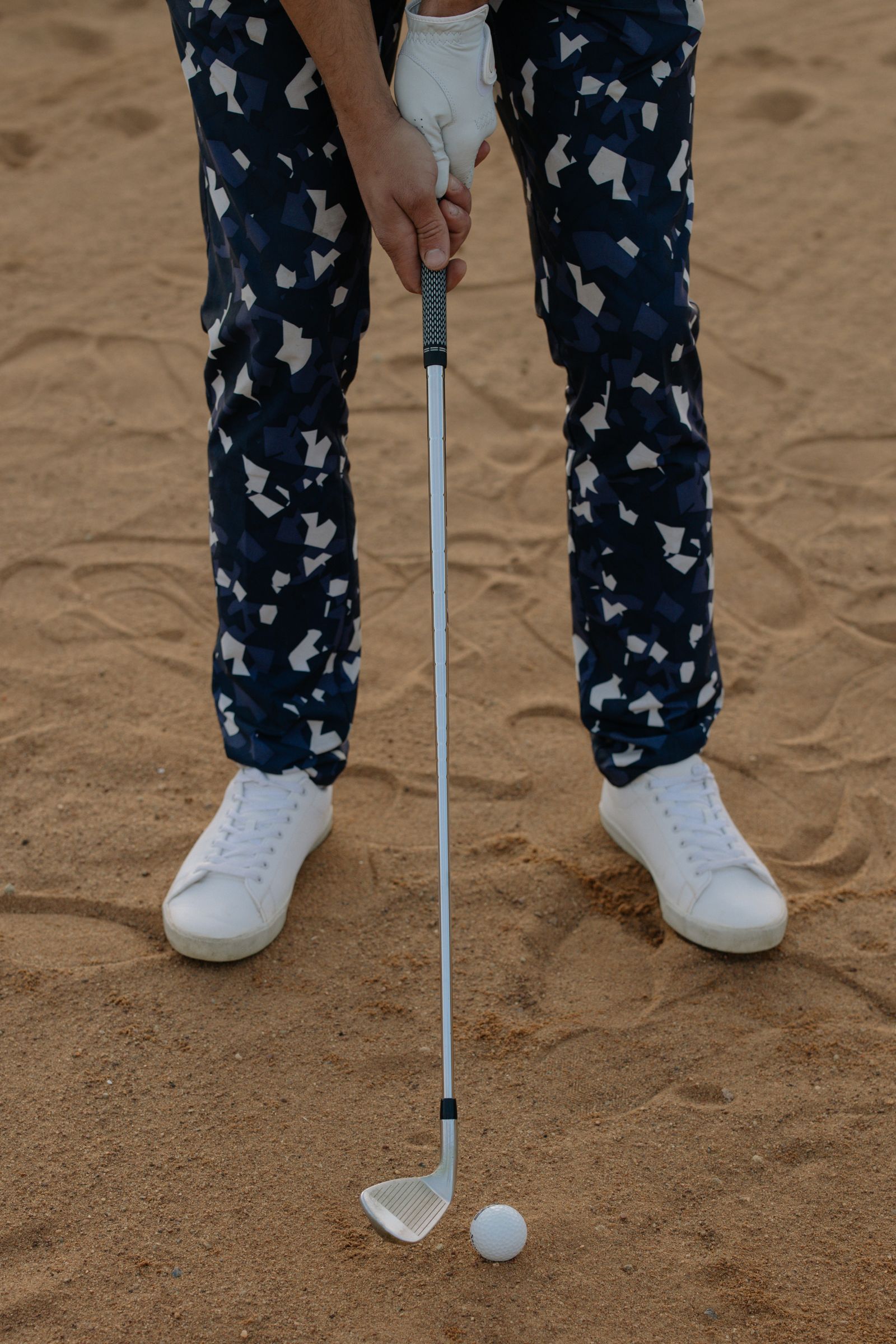
Wedge Bounce Explained: Low, Mid, and High Bounce for Real Courses
Fairway Pick may earn a commission from qualifying purchases at no extra cost to you. This is an educational equipment guide, not a substitute for an in-person wedge fitting.
Quick answer: bounce is the angle between the leading edge and the lowest point of a wedge sole. Low bounce can sit close to firm turf and suit shallow delivery; high bounce gives the sole more help resisting soft ground and sand. Mid bounce is the safest all-purpose starting point. The stamped number matters, but sole width, camber, grind, lie, face angle, and your delivery determine how a wedge actually behaves.
What wedge bounce actually does
Place a wedge on a flat surface and the trailing portion of the sole keeps the leading edge slightly above the ground. That relationship is bounce. At impact, the sole can deflect rather than let the leading edge dig immediately. More effective bounce generally adds forgiveness when the club enters steeply or the surface is soft.
That does not mean more bounce is always better. On tight, firm turf, a wide high-bounce sole may feel as if it meets the ground too early. On fluffy sand, a very narrow low-bounce sole may disappear under the ball. The goal is not the highest or lowest number; it is enough sole interaction for the shots and conditions you face most often.
Low, mid, and high bounce at a glance
| Range | Often suits | Watch for |
|---|---|---|
| Low, roughly 4–6° | Firm turf, compact sand, shallow delivery, open-face creativity | Can dig when the swing is steep or the ground is soft |
| Mid, roughly 7–10° | Mixed conditions and neutral delivery | May be a compromise rather than ideal at either extreme |
| High, roughly 11°+ | Soft turf, fluffy sand, steeper attack, players who take deep divots | Can feel bulky on very tight lies |
Those ranges are useful shorthand, not an industry-wide law. Brands measure and shape soles differently. Compare the complete head design and test from real lies before treating one stamped number as equivalent to another.
Your delivery is the first filter
A player who arrives steeply, leans the shaft forward, and takes deep divots exposes the leading edge and often benefits from more bounce or a wider sole. A shallow player who brushes the turf may prefer less bounce, especially on firm ground. Most golfers are between those extremes and are better served by a versatile mid-bounce option.
Look at patterns instead of one perfect strike. Repeated heavy contact and deep trenches suggest the sole needs more help. Repeated thin shots can have many swing causes, but a sole that feels as though it rebounds from hard ground deserves testing against a narrower or lower-bounce option.
Match the course, not the showroom mat
Firm links turf, baked summer fairways, and shallow hardpan reward a sole that can sit close to the ground. Lush fairways, wet rough, and soft bunkers usually favor more bounce. If your home course changes dramatically by season, a neutral setup is easier than buying for one week of extreme weather.
Sand texture matters too. A broad, higher-bounce sole can keep the head from burrowing in light, deep sand. Compact or thin sand may make that same sole bounce into the ball. Test bunker shots from both normal and poor lies; a wedge that only works after the rake has passed is not a complete solution.
Bounce number is only half the story
Sole width changes how pressure is spread across the ground. Camber describes the curve from leading edge to trailing edge and heel to toe. Relief removes material so the face can be opened without lifting the leading edge as much. Together these features form the grind.
Two wedges stamped 10° can therefore play differently. A wide sole with little relief may act more forgivingly square. A narrow sole with heel and trailing-edge relief may be easier to manipulate. Brand grind charts are helpful, but they are maps of that brand’s lineup—not universal categories.
How opening the face changes effective bounce
Opening the face normally exposes more of the sole and increases effective bounce. That helps a splash bunker shot but can raise the leading edge on a bare lie. Heel relief lets the face rotate open while keeping the leading edge lower, which is why grind choice matters to players who vary face angle.
Do not assume an open face is required for every short shot. A square face, quiet hands, and a predictable landing spot are easier to repeat. Choose special sole relief only if those shots are genuinely part of your game.
Build a practical wedge setup
- List the shots each wedge must cover: full swings, low runners, pitches, bunkers, or open-face lobs.
- Record normal turf and sand conditions at your home course.
- Classify your delivery from divot depth and strike pattern, ideally with a coach or fitter.
- Start the gap wedge near neutral; it is commonly used square on fuller swings.
- Give the primary bunker wedge enough bounce for your sand and technique.
- Test the highest-lofted wedge from the tightest lie you regularly face.
A mixed-bounce set can be sensible: for example, a neutral gap wedge, a higher-bounce sand wedge, and a more relieved lob wedge. But complexity has a cost. If you rarely practice, three predictable square-face tools may beat three specialized grinds.
A useful fitting test
Use the same ball and hit several shots from fairway, rough, a bare patch, and a bunker. Mark impact location with foot spray or impact tape. Compare strike, depth, start line, carry, and how easily the sole exits the ground. One dramatic flop is less useful than ten ordinary pitches.
Test when the ground is representative. Indoor mats hide digging and can reward a strike that would be heavy outdoors. If a fitting is indoors, insist on an outdoor follow-up or a return window that allows course testing.
Common mistakes
- Buying the same bounce in every loft without defining each club’s job.
- Copying a tour player’s grind while playing different turf and using a different delivery.
- Judging only from a clean fairway lie.
- Assuming low bounce automatically creates more spin.
- Ignoring lie angle, shaft length, and technique when contact is poor.
- Grinding a sole permanently before testing a stock option.
FAQ
Is 10° of bounce enough for bunkers? It can be, especially with a supportive sole, but soft deep sand or a steep entry may benefit from more effective bounce.
Does more bounce prevent fat shots? It can reduce digging, but it cannot repair a low point that is consistently behind the ball.
Should beginners use high bounce? Many beginners benefit from mid-to-high bounce because it adds margin, but firm courses and shallow swings may point elsewhere.
When should wedges be replaced? Replace them when grooves, face texture, sole shape, or damage no longer produce predictable contact and stopping power—not just because a calendar says so.
Sources
- Titleist Vokey, Wedge Bounce & Grinds Explained.
- Titleist Vokey, Wedge bounce and forgiveness.