Golf Tee Height Guide: Driver, Fairway Wood, Hybrid, and Iron
Fairway Pick may earn a commission from qualifying purchases at no extra cost to you. This is an instructional guide, not a claim that one setup fits every swing.
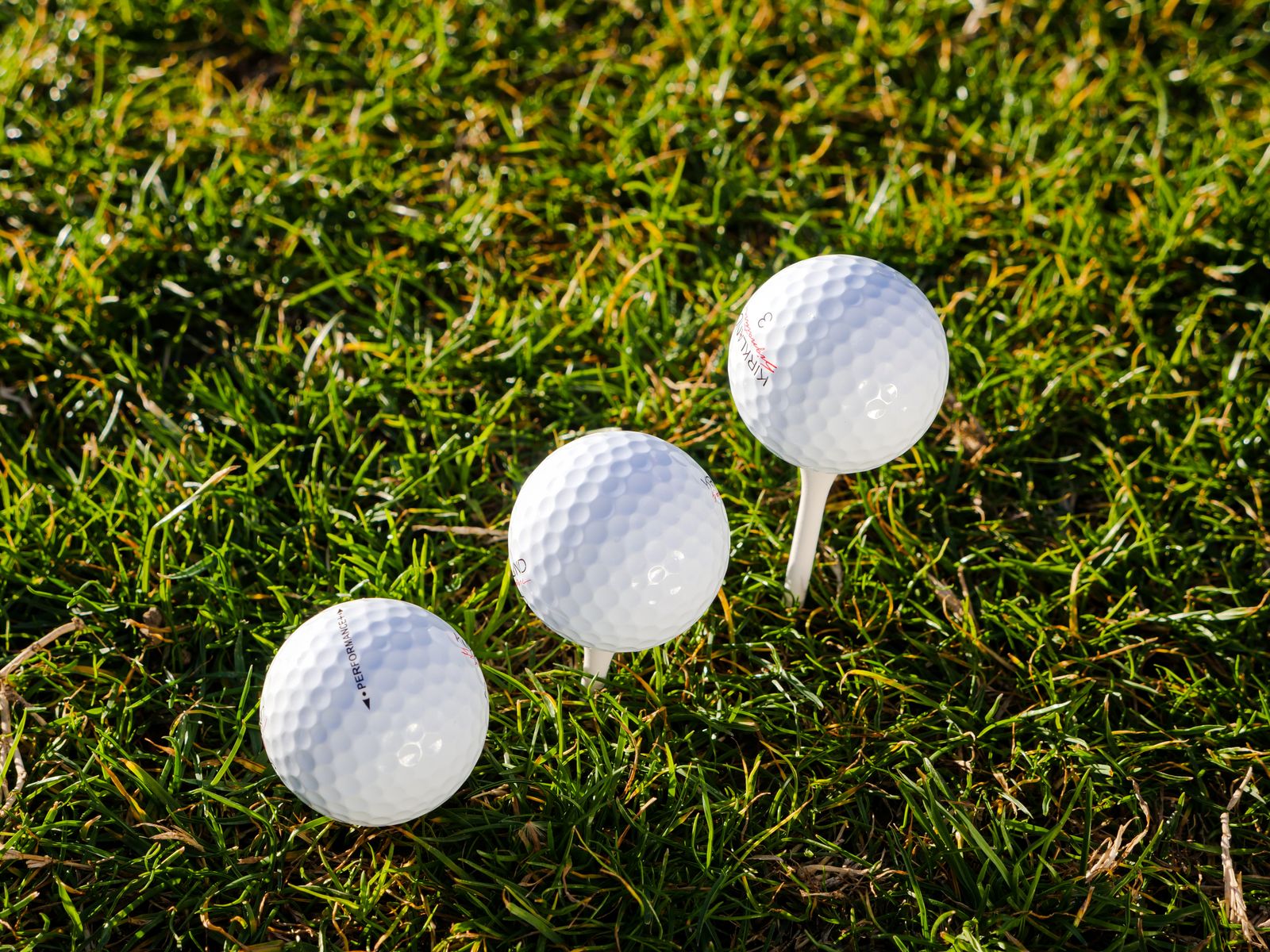
Quick answer: with a modern driver, begin with roughly half the ball above the crown when the club rests behind it. Tee fairway woods much lower, with only a small amount of the ball above the topline. Hybrids and irons need only enough height to create a clean, repeatable lie. Then use face-impact location and ball flight—not appearance alone—to tune the final height.
Why tee height matters
Tee height changes where the club is likely to meet the ball on the face and how naturally you can deliver the club through impact. With driver, a higher starting point can support contact above face center and an upward strike, while a very low ball can encourage low-face contact. But height does not create a good launch by itself; ball position, posture, attack angle, loft, and face contact still matter.
The best height is repeatable. A theoretically perfect tee that you cannot reproduce is less useful than a simple visual reference you can set on every hole.
Starting heights by club
| Club | Practical starting point | Primary check |
|---|---|---|
| Driver | About half the ball above the crown | Centered or slightly high-face contact |
| Fairway wood | Ball barely above the topline | Clean contact without striking under it |
| Hybrid | Very low, similar to a perfect fairway lie | Ball-first contact and stable launch |
| Mid/short iron | Just above the grass | No grass between face and ball |
These are starting points, not rules. Head depth, delivered loft, swing direction, and preferred shot shape can move the useful height up or down.
Driver: use the face as your ruler
Set the driver behind the teed ball on level ground. If roughly half the ball sits above the crown, you have a neutral baseline for a modern deep-faced head. Mark the ball or spray the face with a legal impact indicator during practice, then hit a group of shots at the same height.
Repeated low-face strikes with adequate setup can justify testing a slightly higher tee. Contact too high on the face, sky marks, or strikes under the ball call for a lower tee or a setup review. Move in small increments; changing height dramatically can hide the original pattern.
Fairway woods and hybrids
A fairway wood is shallower than a driver and is designed to strike balls from the turf, so it needs much less elevation. Tee it as though you are creating an excellent lie: the bottom of the ball is just clear of the grass and only a little ball shows above the topline. This helps preserve a sweeping motion without inviting the club to slide beneath the ball.
Hybrids generally need even less. Treat the tee as a way to guarantee a clean lie, not as permission to swing up dramatically. If the club has a compact iron-like face, start close to iron height.
Irons: remove the bad lie
For an iron, the tee’s job is mostly consistency. Push it almost flush with the grass so the ball sits just above the surface. You can still make a normal iron swing with the low point beyond the ball. A tall iron tee may move contact high on the face and reduce predictable spin.
On a par 3, choose a flat area inside the teeing area. A low tee removes small tufts or bare patches from the equation without changing the shot into a miniature driver swing.
Use a three-height range test
- Choose one club and one target.
- Hit five shots at your normal height.
- Hit five slightly lower and five slightly higher.
- Record face contact, start line, curve, carry window, and the worst miss.
- Keep the height that improves the pattern, not merely the single longest shot.
Use the same ball model and reset alignment between groups. If strike location moves randomly at every height, work on setup and delivery before buying specialty tees.
Wind and shot shape
Players often tee lower into the wind, but tee height alone is not a reliable flight-control system. A lower strike on a driver face can increase spin, exactly what a player may not want in wind. Use a controlled swing, appropriate loft, solid contact, and a tested ball position rather than assuming “lower tee equals lower flight.”
A higher tee may make it easier for some players to turn the ball over, while a lower tee may visually support a fade. These are individual tendencies. Confirm them with impact and launch data.
Equipment and rules
The USGA Rules of Equipment state that a tee must not be longer than four inches (101.6 mm), indicate the line of play, unduly influence ball movement, or otherwise assist the stroke. Ordinary wood and plastic tees are simple choices; height-marked tees can improve consistency if they conform.
Use a tee long enough for your driver setting but not so long that it bends or is difficult to place. Carry a shorter option for irons and fairway woods.
Common mistakes
- Changing tee height after every poor swing.
- Copying a tour player’s height without matching head depth or delivery.
- Judging only from launch while ignoring face contact.
- Teeing a fairway wood as high as a driver.
- Trying to flight an iron solely by changing tee height.
- Testing with different balls, targets, and alignments in every group.
FAQ
Should the driver ball always be half above the crown? No. It is a useful baseline. Your strike pattern and launch window determine the final setting.
Can a tee be too high? Yes. It can encourage contact under or high on the face and may not conform if it exceeds the equipment limit.
Do irons go farther from a tee? A perfect lie may improve contact, but distance depends on strike, launch, and delivered loft.
Are brush tees automatically better? No. Use any conforming tee that gives you a stable, repeatable height.
Sources
- USGA, Equipment Rules: Tees.
- USGA, Initial investigation: effects of tee height.
- Titleist, Driving setup and tee-height discussion.