Golf Glove Fit Guide: Size, Material, and Weather
Fairway Pick may earn a commission from qualifying purchases at no extra cost to you. Brand sizing varies, so use the maker’s chart and try a glove with the club you actually play.
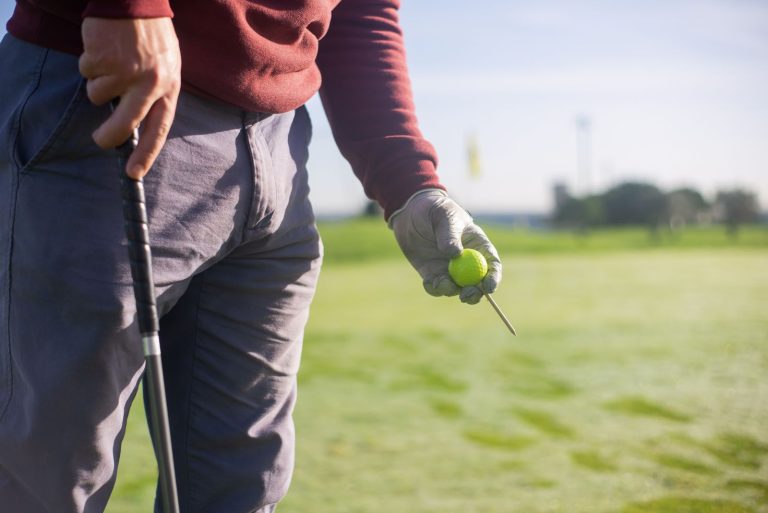
Quick answer: a golf glove should feel like a second skin: smooth across the palm, snug through every finger, and secure at the wrist without cutting off movement. There should be no loose material at the fingertips or bunching in the palm. If a standard glove fits the palm but leaves excess finger length, try a cadet size rather than simply sizing down.
What a correct fit looks like
The glove should slide on with light resistance. Once fastened, the material should lie flat when you wrap your hand around a club. FootJoy’s fitting guidance says the closure tab should reach only about three quarters of the way across when new. That leaves room for the material to relax without the glove becoming impossible to tighten later.
Three checks matter more than the size printed on the package:
- Fingertips: each finger reaches the end without a pocket of empty material.
- Palm: the glove is smooth, not folded or stretched into shiny pressure lines.
- Closure: the tab fastens securely but still has adjustment left.
A glove that is too large can move against the grip and wear prematurely. One that is too small can restrict the hand, strain seams, and feel uncomfortable before the turn.
Measure your hand before choosing a size
- Use a flexible tape to measure around the fullest part of the hand, excluding the thumb.
- Measure from the crease at the base of the palm to the tip of the middle finger.
- Compare both measurements with the specific brand’s chart.
- If the two measurements suggest different sizes, try both rather than trusting a generic conversion.
Measure the hand that will wear the glove. A right-handed golfer normally wears a glove on the left hand; a left-handed golfer normally wears it on the right. Hands are not always identical, and a glove labeled “left” means it is made to be worn on the left hand.
Standard versus cadet sizing
| Fit pattern | Likely starting point | What to check |
|---|---|---|
| Proportional palm and fingers | Standard size | No excess at fingertips |
| Wider palm, shorter fingers | Cadet size | Palm remains smooth |
| Between two sizes | Try both brands and sizes | Grip a club before deciding |
| One finger fits differently | Compare models | Finger shape varies by brand |
Cadet is a shape, not a lower-quality line. It is designed for a broader palm and relatively shorter fingers. Many golfers who have always tolerated empty fingertips discover that a cadet glove fits better immediately.
Leather, synthetic, and hybrid gloves
Leather offers a close, supple feel and can conform to the hand, but it needs careful drying and may wear faster when repeatedly soaked. Cabretta leather is common in premium gloves. A new leather glove should still fit snugly because stretching cannot rescue a size that began loose.
Synthetic gloves tend to resist stretching, cost less, and tolerate frequent practice. They may feel less thin through the grip, although modern panels can provide good flexibility. A synthetic model is practical for the range or humid conditions.
Hybrid gloves place leather in contact areas and synthetic material around joints or the back of the hand. They aim to balance feel, ventilation, and durability. Construction quality matters more than the label alone: check the seams, reinforcement, and whether the closure stays flat.
Choose for the weather you actually play
- Hot and humid: prioritize ventilation, quick drying, and a spare glove.
- Rain: use purpose-built rain gloves, commonly worn as a pair; their grip is designed for wet conditions.
- Cold: winter golf gloves trade some feel for insulation and are also generally worn on both hands.
- Mixed weather: keep ordinary gloves in a sealed bag and rotate before one becomes saturated.
A normal leather glove is not a rain glove. Once it is soaked, forcing it back into play can stretch the material and create slippery movement. Dry grips and a dry towel remain part of the system.
Try the glove with a club
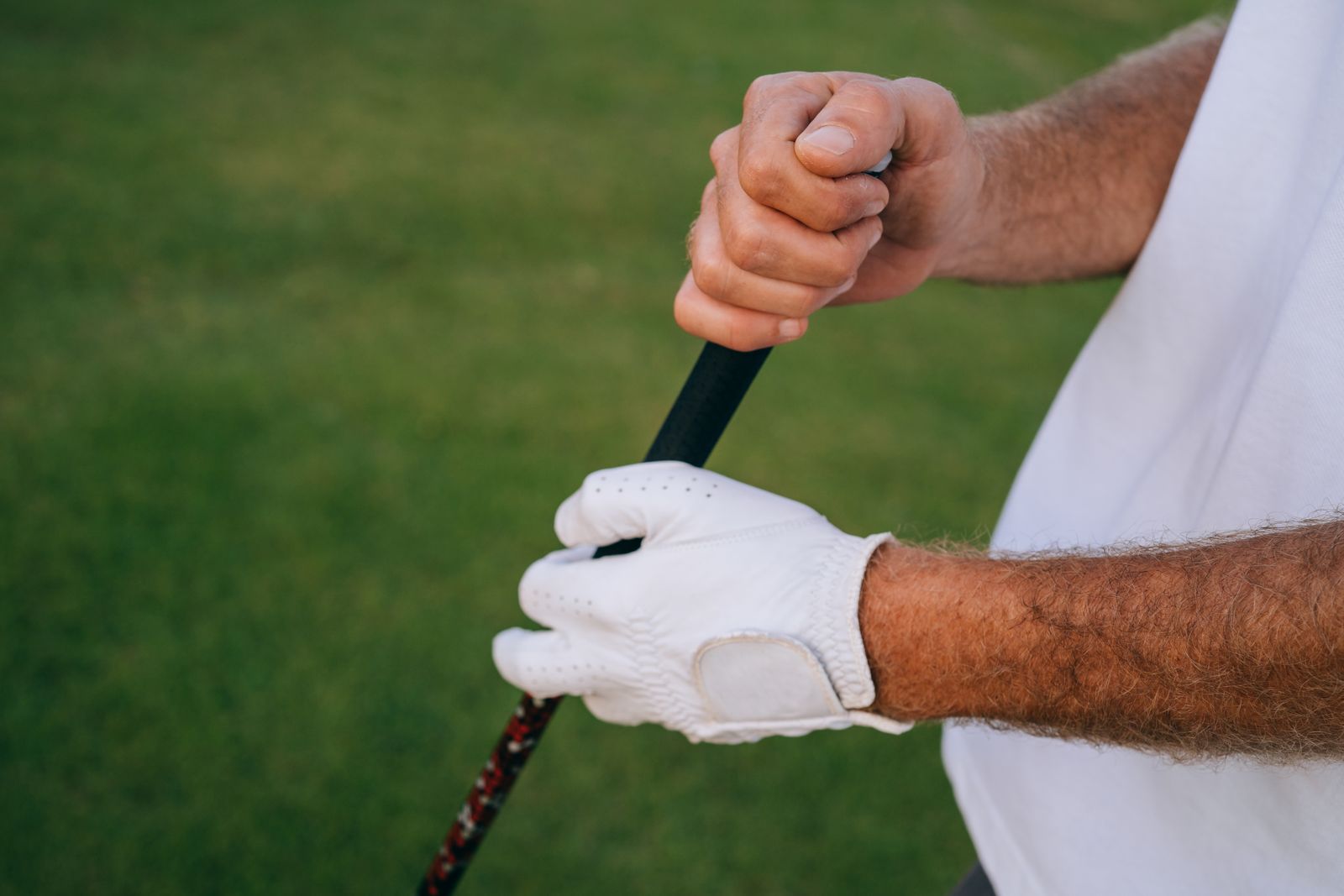
Make a normal grip with the club lying safely on the ground or held in front of you. Check that material does not fold under the heel pad, gather between fingers, or pull the closure open. Open and close the hand several times. The glove should not restrict the knuckles or create tingling.
Do not choose a smaller glove because you think compression automatically improves control. Secure contact helps; restricted circulation and stressed seams do not. Likewise, do not buy extra room “for comfort.” A loose palm introduces movement exactly where the glove is meant to reduce it.
Care and rotation
Remove the glove by easing it from the fingers rather than yanking the cuff. Smooth it flat and let it air-dry away from direct heat. Do not leave a damp glove crumpled in a pocket or sealed in the trunk. Follow the manufacturer’s washing instructions, since leather and synthetic models differ.
FootJoy suggests rotating gloves during play so each can dry. This is especially useful for golfers whose hands perspire heavily. A simple two- or three-glove rotation often preserves fit better than wearing one glove until it is saturated.
When to replace a golf glove
Replace the glove when a hole develops, the palm becomes polished and slick, the closure no longer holds, or the shape remains loose after drying. Wear concentrated in one small spot can also reveal grip pressure or a handle that is moving in the hands. Replacing the glove addresses the fabric; a teaching professional can help if the same unusual wear returns quickly.
Common buying mistakes
- Choosing by usual clothing size instead of the glove maker’s chart
- Ignoring cadet sizes when fingers are consistently too long
- Assuming a glove will shrink into the correct fit
- Testing only with a flat hand, not around a club
- Using one leather glove for heat, rain, and cold
- Buying a multipack before confirming that model’s shape
FAQ
Should a golf glove feel tight at first? It should feel snug, not painful. The palm should be smooth and the fingers fully seated without restricted movement.
What is a cadet golf glove? A glove shaped for a relatively wider palm and shorter fingers.
Can I wear gloves on both hands? Yes. Rain and winter gloves are typically sold and worn as pairs. An ordinary glove on the lead hand remains the common setup in dry weather.
How many gloves should I carry? At least one spare is sensible; humid or wet conditions justify more.